Nail extension. Types of nail extensions
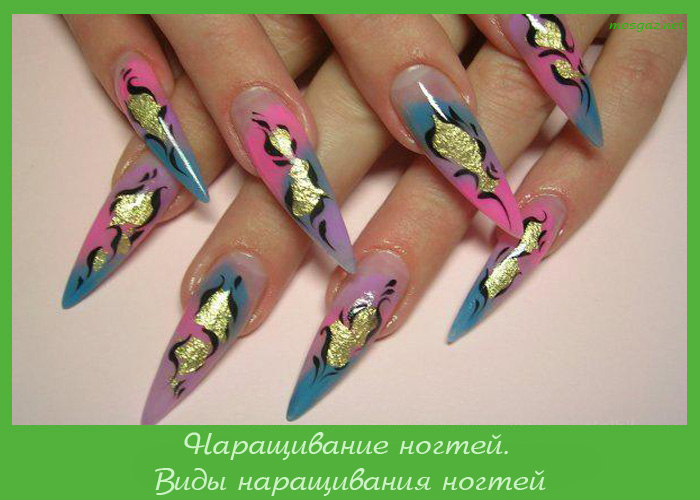
Not every girl naturally has long and strong nails. But don’t be upset, thanks to nail extensions, you can shine with the perfect manicure any day.There are two ways in which I extend my nails:
— on tips;
— on forms;
These methods are divided into types depending on the material used: acrylic or gel. Let’s take a closer look.
Using tips
Tips are artificial plates; they are attached to natural ones with glue. They are transparent and milky, and also have a ready-made form. With a large selection of different types and bends of artificial nails. A professional will help you choose the most suitable one for you.
Extension on forms
Forms are disposable material made of paper. Use the sticky edge to attach to the nail. On the other side of the form there is a special substance that prevents the strong adhesion of the material that will be used during nail extensions.
In addition, there are reusable forms made of metal. They are attached to the nail using a clip. Before using a reusable form, it must be sterilized.
Care for extended nails
Artificial nails last up to four months. Within a month, natural manicures grow noticeably and the appearance of the manicure loses its attractiveness. To maintain it, nails need care in the form of correction.

Using acrylic
Acrylic nails provide natural protection from harmful environmental influences. In the salon, professionals distribute the acrylic mixture in a matter of seconds. Let’s look at the pros and cons of this procedure.
Advantages:
1. Acrylic is a durable material that looks natural on nails.
2. Duration of use is 3-4 months, with proper care.
3. Manicure is easy to remove using a special liquid.
Disadvantages:
1. Unpleasant smell during nail extensions.
2. They can’t stand blows.
3. Nail polish and acrylic nail remover should not contain acetone.
Gel nail extensions
This method is more environmentally friendly than the previous one. Gel nails allow air to pass through well, so they will not harm natural nails. In addition, they have other pros and cons.
Advantages:
1. Large selection of nail decorations, such as aquarium and holographic effects.
2. Drying with an ultraviolet lamp prevents the occurrence of fungal nail diseases.
Disadvantages:
1. Sudden changes in temperature cause brittle nails.
2. If a defect appears on the nails, it cannot be corrected.
3. Such nails can only be removed using a special file.
In addition, salons offer mixed gel and acrylic extensions. There is also a service that uses biogel. This substance does not contain toxins, but has the disadvantage of not being durable.


