Art Nouveau garden
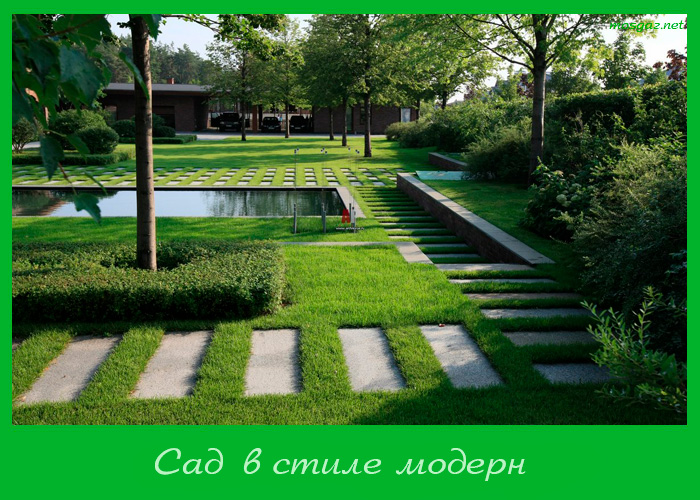
The Art Nouveau style originated in Europe back in the 19th and 20th centuries and has now managed to find many adherents among landscape designers due to the fact that natural beauty is always more attractive when it comes to garden design.The garden, designed in Art Nouveau style, is distinguished by laconic details in combination with a small number of plants. By visiting the site gardennews. ru dedicated to the topic garden vegetable garden design ideas you can find it there in a special section of the blog dedicated to this topic.
Characteristics
The layout of the composition of a modern garden involves the design of a garden house in harmony with the surrounding area. Compositions of plants are used in home decor, and the contours of the house facade are repeated in the design of the garden.
Very often, when planning a garden in the Art Nouveau style, landscape designers use the principle of a central composition, the central point of which is the house, from which flow smooth curves that zone the space. The zones are separated by hedges, lawns and winding stone paths. At the same time, all lines, including the shapes of decorative elements, must be smooth and rounded.
A characteristic feature of the modern garden is the repetition of motifs. Elements can be played out many times and repeated in various variations. Finally, another feature of the style is contrast, which manifests itself in the combination of colors and the interaction of light and shadows.
Garden decoration
The number of plants that are used to decorate a garden in the Art Nouveau style is, as a rule, minimal, so they must be selected with special care. You can opt for traditional plants, such as maples, willows, oaks, birches and ash trees. These trees are planted individually or in small groups. Or you can use unconventional combinations, for example, planting dwarf fruit trees against the background of conifers with twisting trunks of bizarre shapes. Exotic plants with unusual trunks and leaves are great for a Art Nouveau style garden. Among the flowers for a garden in this style, various varieties of irises are often chosen.
Bushes and other plants that need pruning are given different shapes. Elements with oriental notes are often used for decoration – these can be plants growing in eastern territories or pagoda-shaped gazebos.
Art Nouveau gardens often feature ponds, which serve as original decorations. The pond can take the form of a pond with a fountain or a meandering stream. Rowan trees, birches, or willows would look appropriate near the pond.
Additional decorative elements in an Art Nouveau garden include lanterns, benches, and gazebos with delicate ornamentation. Paths are paved with paving stones, natural stone, or tiles. The walls of garden buildings are decorated with climbing plants such as ivy, clematis, morning glory, or grapes.

Art Nouveau style combines practicality with beauty, with beauty playing a central role. An Art Nouveau garden should not be turned into a vegetable garden, as the style emphasizes aesthetics and the enjoyment of beautiful landscapes and graceful forms. Art Nouveau Gardens often feature ponds, which serve as original decorations. The pond can take the form of a pond with a fountain or a meandering stream. Rowan trees, birches, or willows would look appropriate near the pond.