Tennis balls
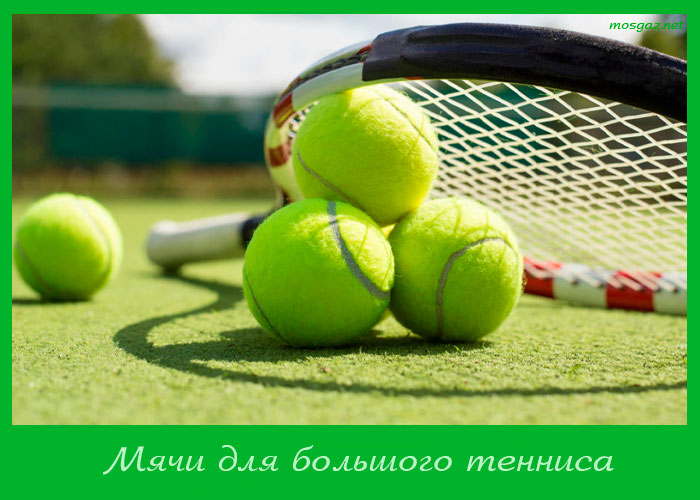
Tennis is a fairly ancient game that has a very rich history. This magnificent game appeared in France, back in the 12th century, and was very different from the modern game.It must be emphasized that only in the first half of the 70s of the 19th century this game was officially adopted. With the changes and development of the game, the items for the game in turn also changed a lot. Today, tennis is a very popular and exciting game that cannot be imagined without balls.
Tennis balls in Scotland were previously made from sheep skin and covered with sheep’s wool. After that, they were tied with a rope, after which they were one hundred percent ready to play the game. Only they could only be played on stone floors, otherwise the ball would not bounce. A little later they began to be tied with white ribbons. This tradition still exists today.
Finally, in the first half of the nineteenth century, they stopped killing sheep and learned to create rubber tennis balls. Since that time, strict requirements for them have appeared: yellow-green or white color, weight (56. 7-58. 6 g) and size (6. 35-6. 67 cm).
Types of tennis balls
It is necessary to clarify that the ball is made up of a fabric covering and an inner rubber core. Depending on the surface of the tennis court, the type of fabric covering and the thickness of the rubber will be determined.
Fast, slow and medium balls
The most common are medium tennis balls, which can be played on any court. But fast tennis balls are used for clay, and they are taken by those players who have a penchant for playing in a more active mode.
Leaky and Sealed Balls
In most cases, leaky ones are chosen by real specialists. Such a ball retains its properties for a long time, because its internal pressure is similar to the external one.
The sealed ones come in special tablets or are filled with inert gas. If you hear a knock, it means that there is a tablet in it that has not yet completely decomposed. Don’t forget that this is a high quality sign. To prevent the gas from evaporating, they are stored in special packaging.
Without pressure and with pressure
The most popular are balls that maintain increased pressure. But it’s quite difficult to find one without it, and they have pretty decent luck, because they are made from fairly thick rubber and don’t bounce well. But they have a fascinating feature: they get better over time. But for balls with pressure, time is the enemy.

Hairiness
Much more often, tennis balls are wrapped in cloth, which is made from synthetics, cotton or wool. There are companies that breed and raise special sheep for production, the wool of which has the necessary characteristics.
Why the ball has a catchy color is easily explained: this is how players see it best. Based on this, whites are not currently used.
Balls are classified according to their hairiness in the following way:
- simple level;
- for grass;
- with increased lint level.
How to choose the right ball that will be suitable for the game?
To determine suitability for the game, you need to stand on a hard surface and, raising it to eye level, release it. If the tennis ball bounces up to waist height, then it is fully acceptable to play with it. In addition, test it for elasticity: if it can be compressed too much, then you will need to look for a replacement.